


Co-authored by David Goldman, Deputy City Administrator from the City of Oak Harbor, Wash. and member of the Government Finance Officers’ Association (GFOA) and Budgeting and Fiscal Policy Committee (BUDGET)
Multiple organizations are working to make annual financial reports produced by cities more understandable.
The organization responsible for developing the accounting and reporting practices that many local and state governments are required to follow, the Governmental Accounting Standards Board (GASB), is planning on putting together a library of five to 10 minute videos that will focus on providing a basic understanding of the concepts underlying the Annual Comprehensive Financial Report (ACFR) with the aim of helping election officials become conversant in the major sections of ACFRs, which include: Management Discussion & Analysis, Basic Financial Statements, Notes, and Supplementary Information.
The Government Finance Officers Association (GFOA) is creating resources to help elected officials better understand and use annual financial reports. The goal is to improve their grasp of local government financial health so they can communicate this information more effectively to their constituents.
To get a better sense of where elected officials and their communities stand on their understanding of annual financial reports and finances, NLC asked its members a short series of questions in October 2025. When asked to rate the level of concern among their city’s electorate and stakeholders regarding selected financial areas, respondents indicated either major or moderate concern, ranging from 63 percent for compliance and accountability to 79 percent for revenue trends and composition. This indicates that financial health is of great concern to cities nationwide.
Overall Financial Position Is the Area of Most Concern for Elected Officials
(Percentage of Responses by Financial Area)
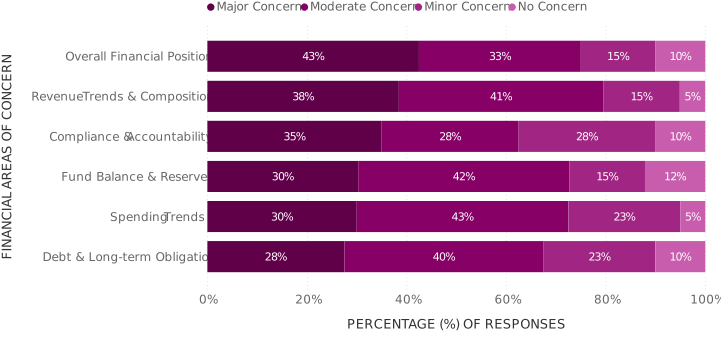
Figure Note: Percentages are calculated as the proportion of all total responses to the question (n=40).
When asked, “Are you satisfied with your current level of understanding of your city’s finances?” nearly half of the respondents indicated they were not. This indicates that additional resources and education regarding municipal finance could help.
Nearly Half of Respondents Are Not Satisfied With Their Own Level of Understanding of Their City’s Finances
(Percentage of Responses)
Spacer to hold for graphic

Figure Note: Percentages are calculated as the proportion of all total responses to the question (n=40).
Spacer to hold for graphic
When asked about the quality of communication from staff on municipal finance topics, overall, most elected officials rated staff communication positively, with 62–72 percent saying it “needs a little improvement” or better. This suggests that key messages are getting through, but there is still room for improvement to ensure clarity and consistency for everyone.
CFOs Report Revenue Trends & Composition Has the Least Satisfactory Communication from Staff
Percentage of Responses By Top Areas CFOs Identified as Areas for Improvement
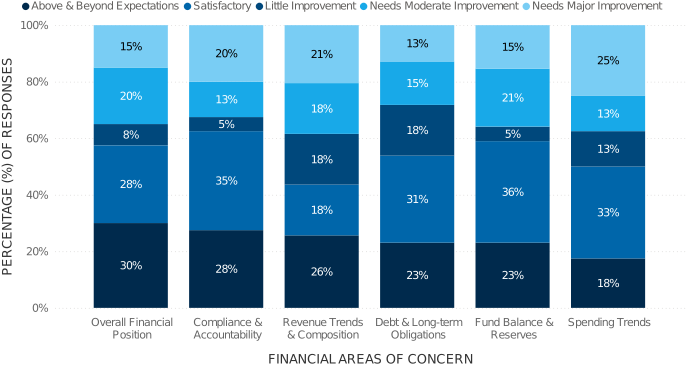
Figure Note: Percentages are calculated as the proportion of all total responses to the question (n=40).
The efforts of GASB and GFOA, combined with feedback from NLC members, underscore a clear need for improved education and communication regarding municipal financial reporting. While cities benefit from capable staff who communicate effectively, the data shows that many elected officials still feel under prepared to fully understand and explain their city’s financial health. By providing accessible resources—such as concise videos and practical guides—these organizations aim to bridge the knowledge gap, enabling elected officials to make informed decisions and convey complex financial information that resonates with their communities. Ultimately, enhancing financial literacy among local leaders strengthens transparency, accountability, and trust between governments and the public.
About the Author


What Local Leaders Need to Know About the Senate Permitting Reform Package

- Carolyn Berndt

A New Way to Manage Rising Health Care Costs: Prevent+Protect

- Bearing Advisors

City Fiscal Conditions 2026 Release

Prevent+Protect Offers Local Leaders a New Way to Manage Rising Health Care Costs

What Drives Employee Financial Well-Being?

- NLC Partnerships
