

Authored by Daniel Jeffries, AICP, Principal Planner, Tulsa Planning Office
Key Takeaways
- Perceptions about housing are often inaccurate. Publicly available data can help clear these misperceptions, especially when presented in unconventional ways.
- Have a story to tell, and use graphics to help tell it. They don’t need to be fancy; simple charts, graphs and maps can go a long way, especially when making comparisons.
- Traditional presentations can lose an audience; use more interactive formats, like quizzes, to keep participants engaged and actively focused on the material.
By a vote of eight to one in late October 2024, the Tulsa, Okla. (pop. 413,066) City Council passed a set of zoning code amendments intended to ease much-needed housing development in the growing city. The zoning reforms were relatively straightforward to planners and those involved in the development process, but not so to everyone, and their passage was complex and uncertain. What was intended to be the first small batch of easy wins to make an immediate difference took more than a year and a half to adopt.
The 19-month march toward adoption stalled several times, each discussion with planning commissioners and city councilors ending in more questions rather than more clarity. In time, it became apparent that the traditional one-way presentation style was part of the problem. Following the familiar format of lecturers and listeners led to poor engagement, poor comprehension, and a loss of the key concepts.
A new approach was needed, so planning director Susan Miller, AICP and I decided to invert the conversation, creating a set of quiz-style presentations with simple charts and graphics illustrating demographic and development statistics related to the proposed amendments. To prepare, I spent time poring over publicly available Census data, counting cars and parking spaces, consulting with planners in other cities and revisiting our office’s housing surveys before creating the suite of infographics in Adobe Illustrator.
Switching to a quiz format accomplished four main objectives: it turned once-passive audiences into full participants by giving them an active role in the discussion; it made the wonkish topics more interesting and relatable; it created a fun, spirited competition — everyone wanted to beat their colleagues by answering correctly — and it provided an opportunity to challenge widely-held assumptions about Tulsa residents, household preferences, housing stock and development issues.
Instead of passively listening, participants now needed to closely consider the questions and formulate their responses. Susan and I took turns posing the questions and surprising participants with the correct answers. This was a real turning point in the conversation: cell phones were put down, side conversations were halted, people were focused, topics started to click and connections to the proposed amendments were made and shared freely.
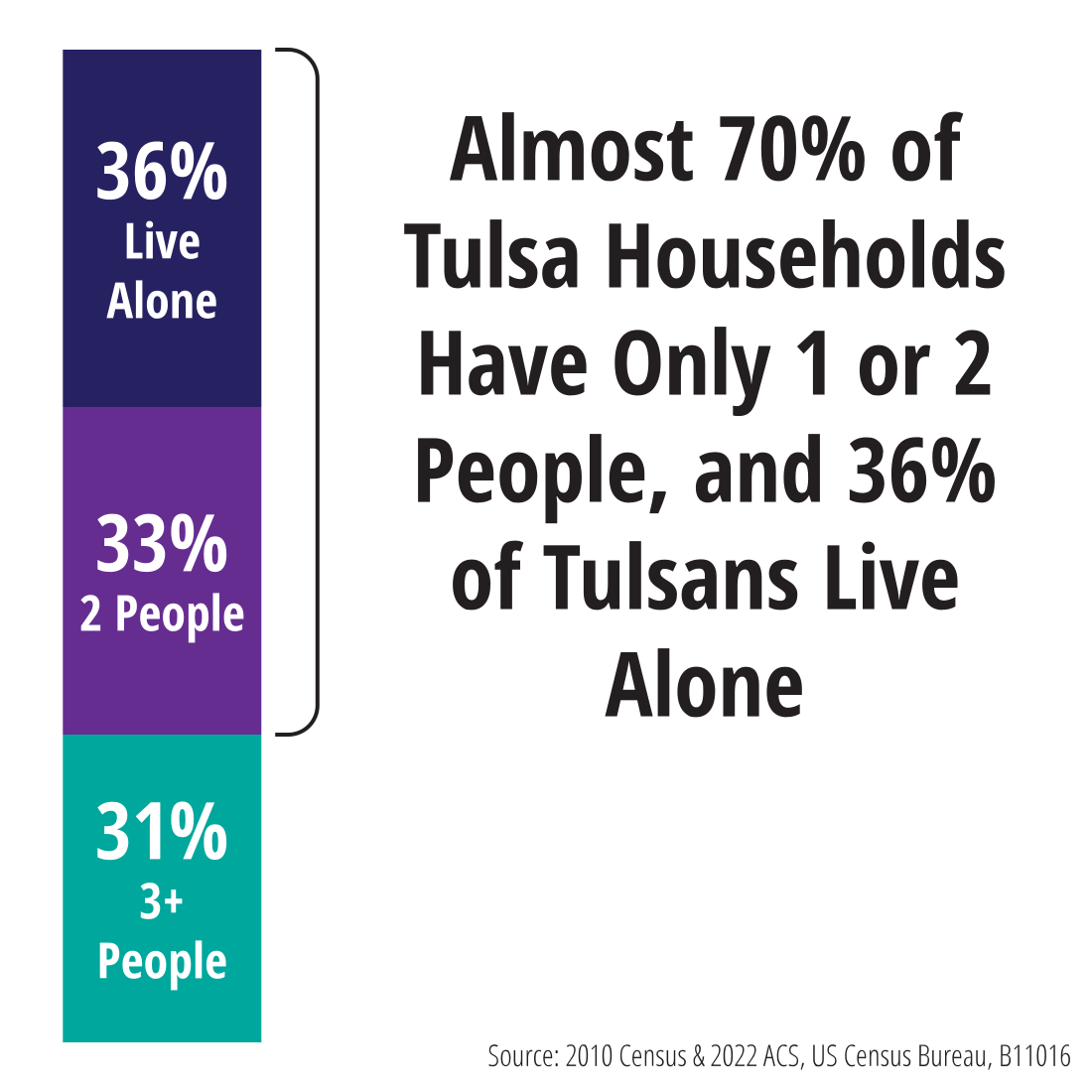
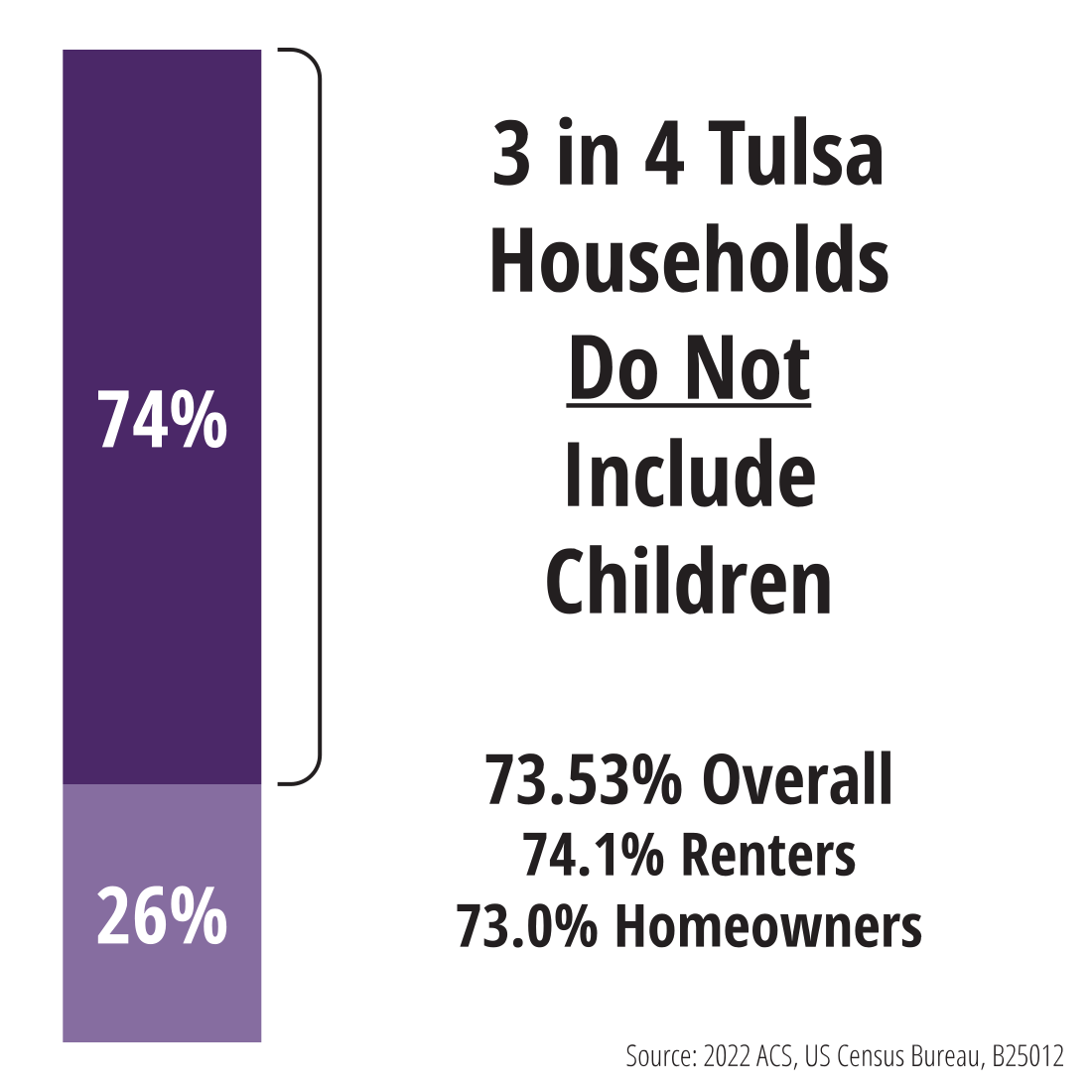
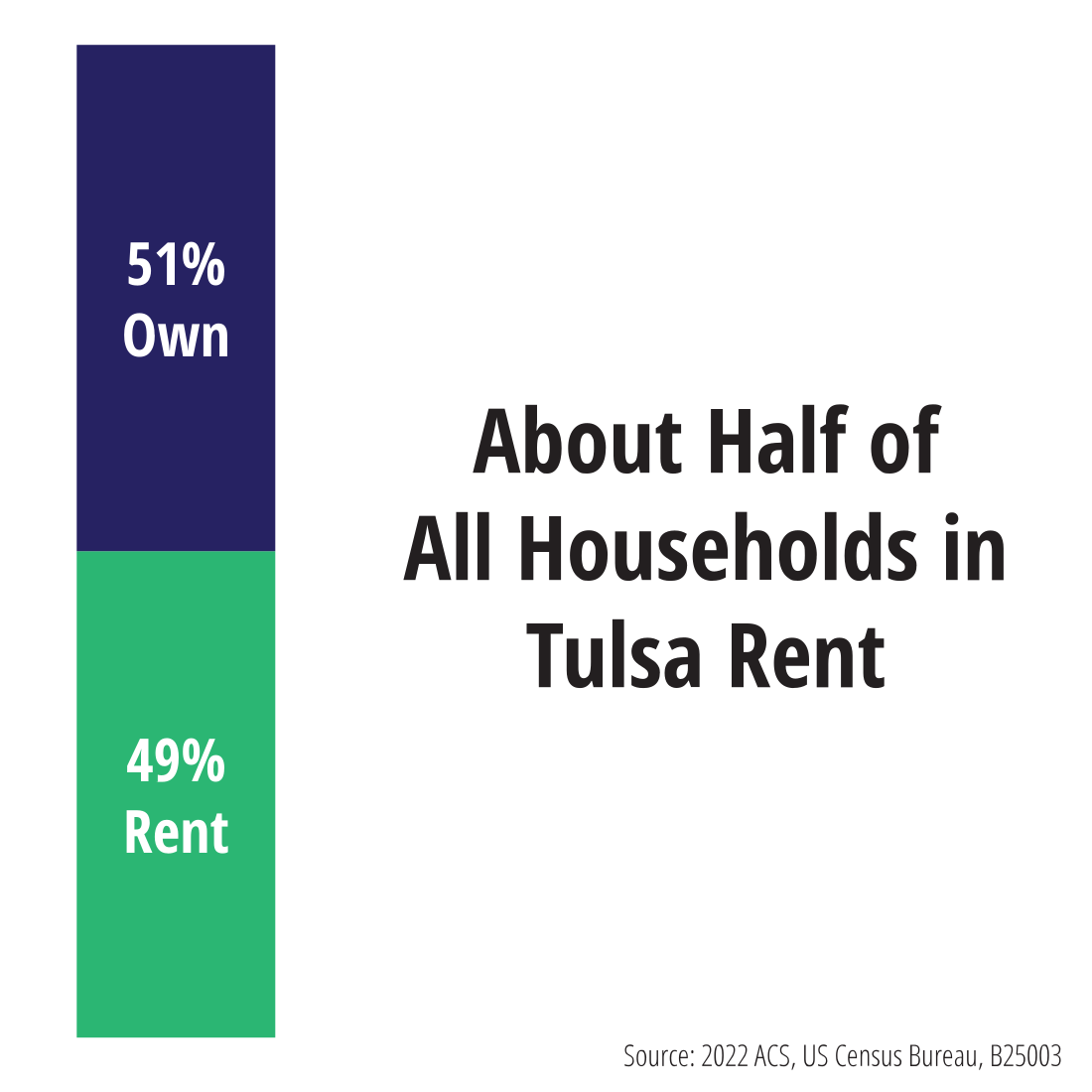
Diagram Credit: Daniel Jeffries, from the 2024 Housing Series Presentations
Most participants were shocked by several of the answers. For example, participants were stunned to learn that the most common household in Tulsa (36 percent) consists of a single person living alone, followed by households with just two people (33 percent), collectively accounting for almost 70% of all households in Tulsa.
Participants may have been even more surprised to learn that roughly three in four Tulsa households do not include any children, regardless of homeowner or renter status.
Likewise, people were consistently surprised that roughly half of Tulsa households (49 percent) are renters.
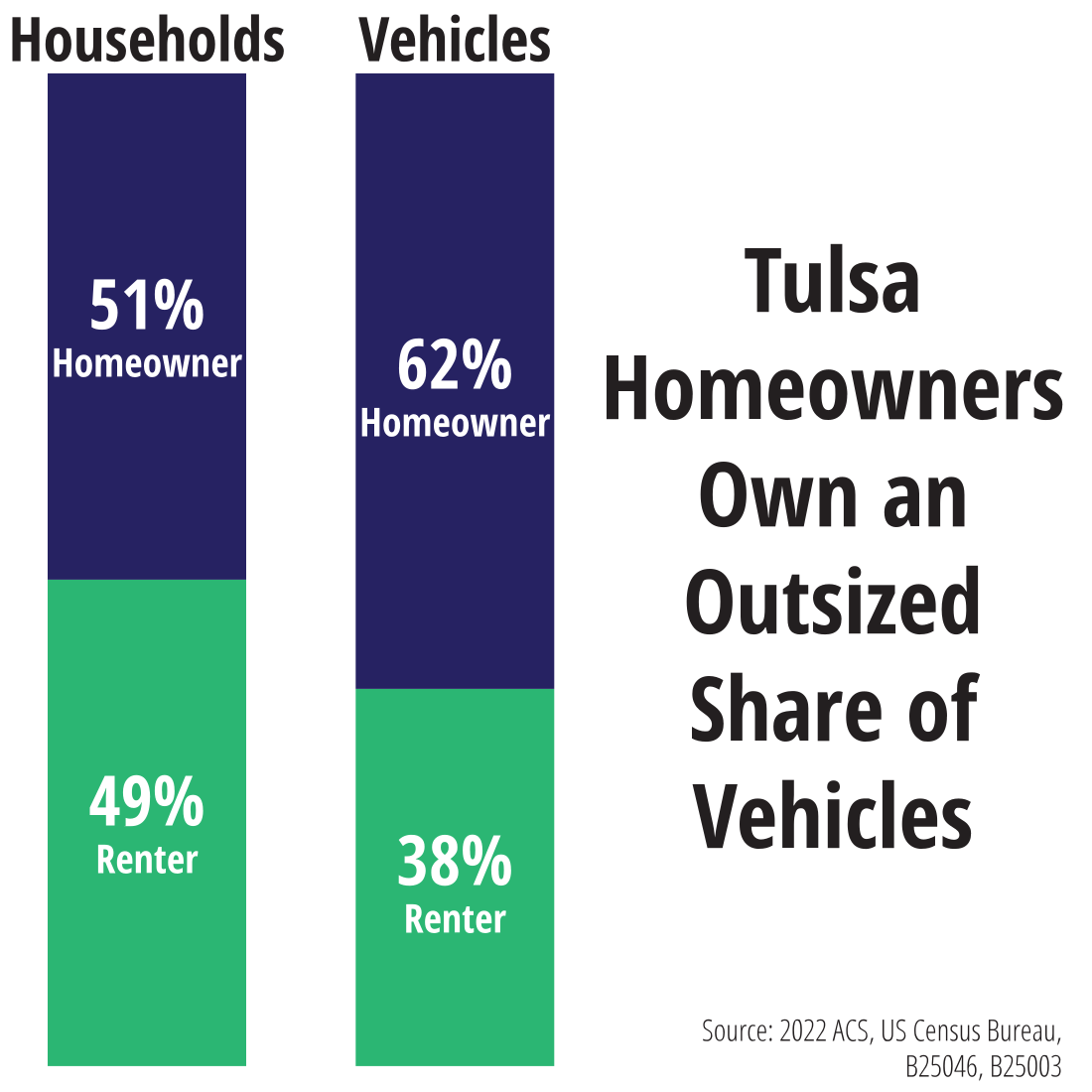
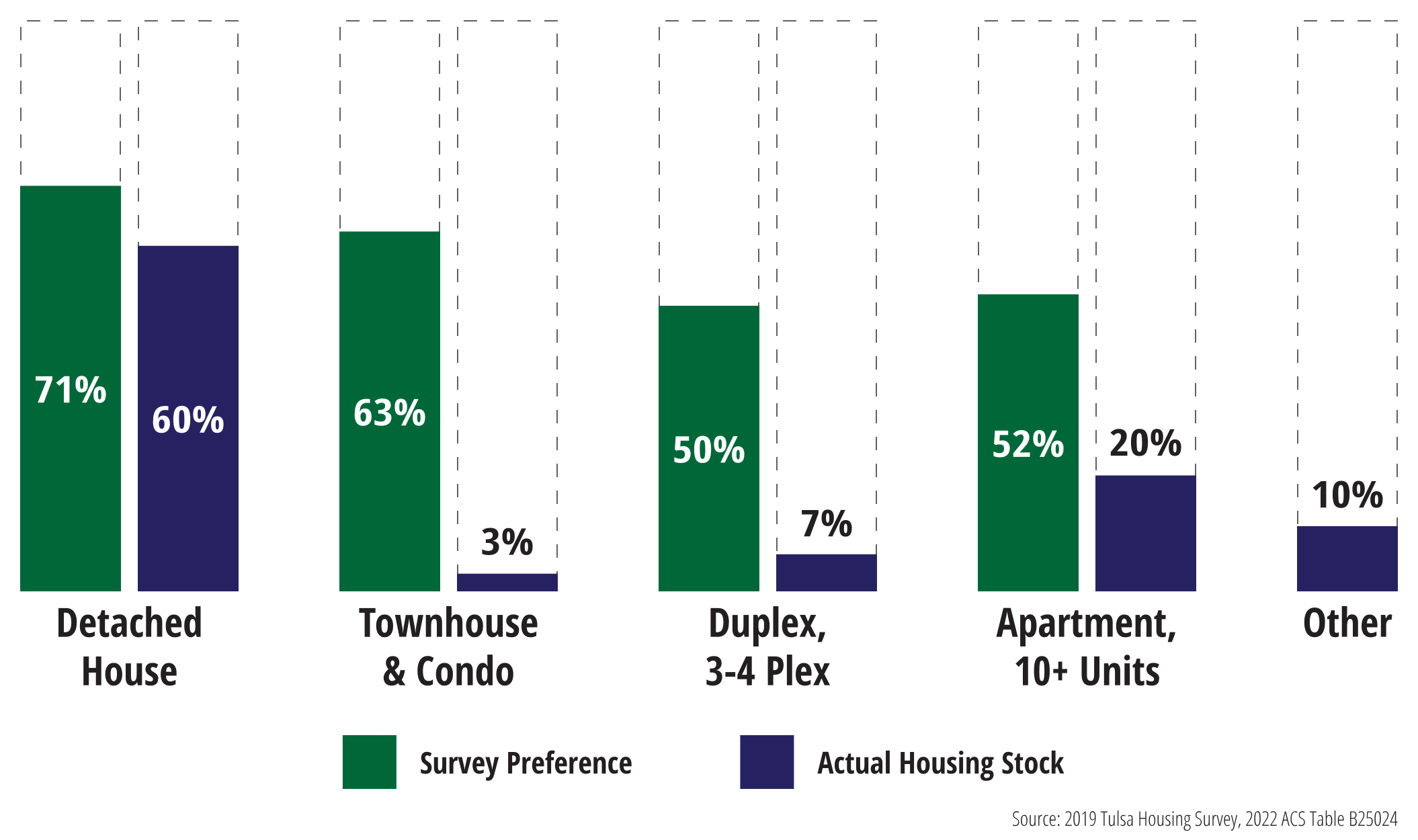
Diagram Credit: Daniel Jeffries, from the 2024 Housing Series Presentations
Susan and I continued the eye-opening quiz with questions on car ownership, lot sizes, parking requirements and more, and explained how those statistics were related to the proposed zoning code amendments. It took some time to gather the data, but this kind of analysis could easily be replicated by any city facing similar challenges.
We incorporated our office’s previous housing-preference survey work and visually highlighted a massive mismatch between those results and our existing housing stock. In one survey, respondents were asked to select all the housing types they would like to live in if a unit were available, affordable, and in a neighborhood they liked. Though there was enormous interest in townhouses and condos (63 percent), those only make up 3 percent of Tulsa’s housing stock. Similarly, 50 percent of respondents were favorable toward duplexes, triplexes, and quadplexes, but these types account for only 7 percent of our housing stock.
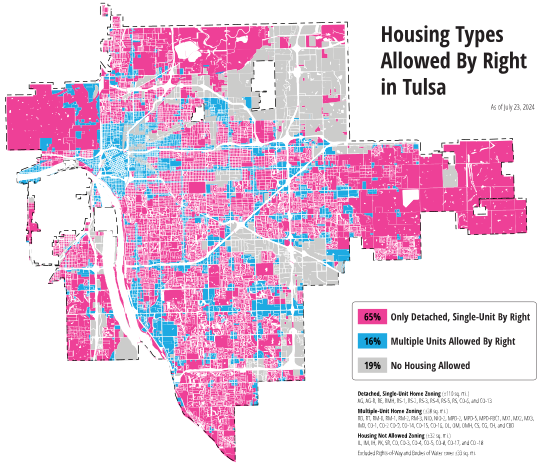
In a second survey, 68 percents of respondents said the City should allow backyard cottages/accessory dwelling units (ADUs) in more neighborhoods, but ADUs were allowed by right (qualifying for construction without requiring discretionary approval) in only 8 percent of the city at the time and required special permission and a public hearing process in 67 percent of the city. I have since identified and mapped existing ADUs to determine how many we currently have, which accounts for only about 1.2 percent of our housing stock. These disparities between preferences and built outcomes are the results of decades of regulatory decisions primarily oriented toward promoting detached homes over all other types of housing, and the visuals used in the presentations helped us tell that story in a new and compelling way.
The quiz format worked: the zoning amendments were soon passed, and they also sparked a larger conversation about housing. We received letters of support from local architects, builders and AARP Oklahoma. Local home builders began talking about building units other than the ubiquitous detached house with at least three bedrooms and two bathrooms. We were invited to present our quiz show to several local groups and at a local housing seminar, and created a webpage to house the presentation series.
These Housing Feasibility amendments were largely the result of a long-standing committee of city staff led by the Tulsa Planning Office, which strives for continuous improvement to the zoning code. Staff from the planning office, code enforcement, development services and the legal department meet frequently — usually twice a month — to discuss challenges in the zoning code and jointly work on solutions. These amendments were also bolstered by analysis and recommendations by AARP Oklahoma, and their adoption was recommended in multiple adopted studies.
Through regulatory reform, process improvements, pre-approved plans, voter-approved funding and other programs, Tulsa leaders and residents are attempting to address a severe housing and homelessness crisis. According to a 2023 housing assessment, Tulsa needs to almost 13,000 new housing units by 2033 to meet demand, with an immediate need of 4,000 units. To achieve that goal, housing permits need to increase by 55 percent over current figures.
Zoning reform alone cannot accomplish our housing goals (there are many other obstacles to building new homes) but it is key to unlocking abundant housing construction. Communication strategies play a key role in getting those reforms passed, so when one approach is not working, planners and city leaders must rethink how they are telling their story — even if that means they are the ones asking the tough questions.
Daniel Jeffries, AICP, is a principal planner at the City of Tulsa, where he oversees special projects including policy research and development. He holds a Master of Urban Design from the University of Oklahoma and a bachelor’s degree in marketing from the University of Tulsa.


