


Cities across the country entered the FY 2025 budget cycle facing mounting infrastructure demands amid increasingly constrained fiscal conditions. As aging assets require more frequent maintenance and replacement, local governments are balancing the need to invest in core infrastructure such as roads, water systems and public facilities against rising costs and competing budget priorities.
City Fiscal Conditions 2025 survey data from cities revealed that infrastructure needs have continued to rise from FY 2024 to FY 2025, with these growing demands placing strain on municipal budgets. While infrastructure spending has largely been maintained, particularly in smaller communities, the data underscores the financial pressure cities face as they work to sustain essential services and long-term capital investments.
Rising Infrastructure Needs Are Closely Linked to Budgetary Strain
Among cities reporting increased infrastructure needs in the 2025 survey, an overwhelming majority — 90 percent (125 out of 132 cities) — also report a negative budgetary impact, underscoring how growing demand for capital investment is straining local finances. By contrast, no cities experiencing decreased infrastructure needs reported either positive or negative impacts on their budget, reflecting the rarity of declining demand in the current fiscal environment. The CFC survey data emphasized that rising infrastructure needs were not only widespread but also closely associated with fiscal stress for cities heading into FY 2025.
Infrastructure Spending Rises in a Majority of City Budgets
Infrastructure Spending Rises Across Most City Budgets in FY 2025
Percentage (%) of Responses in Infrastructure Spending Status, By Population Category
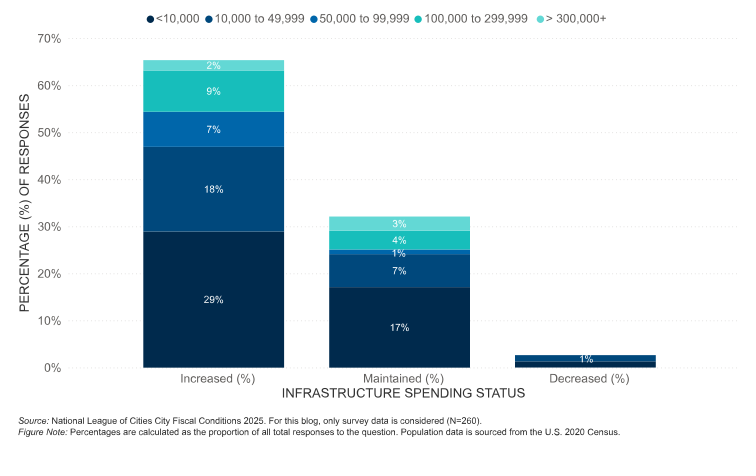
Figure Note: Percentages are calculated as the proportion of all total responses to the question. Population data is sourced from the U.S. 2020 Census.
The figure above examines how cities adjusted infrastructure spending during FY 2025 amid rising infrastructure needs and ongoing budget pressures. The majority of cities reported increased infrastructure spending, accounting for 65 percent of all responses. This trend spans cities of all population sizes, with the largest share of increases reported by cities with populations under 10,000 and those between 10,000 and 50,000.
At the same time, nearly one-third of cities (32 percent) indicate that they have maintained infrastructure spending, reflecting efforts to preserve existing investment levels despite constrained budgets. Only a small fraction of cities (3 percent) reported decreasing infrastructure spending, suggesting that reductions remain relatively uncommon. Overall, the data indicates that cities continued to prioritize infrastructure investment, even as infrastructure needs placed sustained pressure on local budgets.
Infrastructure Needs Drive Budget Pressure Across City Population Sizes
Increased Infrastructure Needs Negatively Impact City Budgets
Reported Percentage (%) of Impacts of Infrastructure Needs on City Budgets, By Population Category
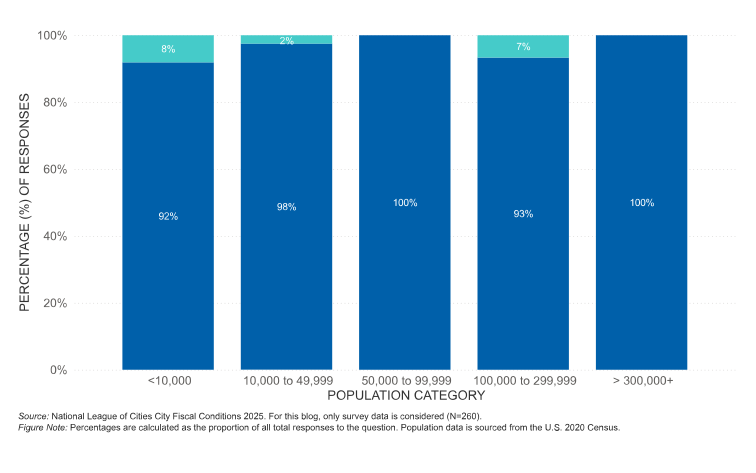
Figure Note: Percentages are calculated as the proportion of all total responses to the question. Population data is sourced from the U.S. 2020 Census.
While the first visualization highlights the growing fiscal strain associated with rising infrastructure needs and infrastructure spending, our second figure shows that the negative budgetary impact of rising infrastructure needs is felt most acutely by smaller cities, even as communities of all sizes report fiscal strain.
Ninety-eight percent of the mid-sized cities, particularly those with populations between 10,000 and 50,000, reported increased infrastructure needs negatively impacting their budget. While every population category reports predominantly negative impacts, cities with populations between 50,000–100,000 and those over 300,000 report negative impacts exclusively, whereas cities with 100,000–300,000 residents report a small but notable share of positive outcomes.
A report from the NYU Furman Center’s Housing Solutions Lab (PDF) shows that small and mid‑sized cities (roughly 50,000–500,000 residents) often experience greater operational and fiscal strain than larger cities when responding to major policy or economic stressors. The study finds that while large cities tend to have dedicated staff, stronger institutional infrastructure and access to philanthropic and federal resources, mid‑sized cities are more likely to report negative impacts because they lack sufficient staffing and financial capacity to absorb new demands.
The data also highlights how rising infrastructure demands disproportionately strain smaller communities as well as larger communities.
Conclusion
Taken together, the survey findings highlight the growing challenge cities face as infrastructure needs rose from FY 2024 to FY 2025. Yet, even in the face of these pressures, most cities reported increasing or maintaining infrastructure spending, underscoring the essential role infrastructure plays in supporting local services, public safety, quality of life and long-term community resilience.
As cities navigate rising costs and competing fiscal priorities, understanding these trends remains critical. Increased infrastructure demand is closely associated with negative budgetary impacts, particularly for smaller cities with limited fiscal flexibility. Additional data and expanded analysis will be released in the forthcoming Municipal Infrastructure Conditions 2026 report. The 2026 report will provide deeper insight into infrastructure needs, spending patterns and fiscal actions across cities nationwide.
About the Author


A New Way to Manage Rising Health Care Costs: Prevent+Protect

- Bearing Advisors

City Fiscal Conditions 2026 Release

Prevent+Protect Offers Local Leaders a New Way to Manage Rising Health Care Costs

Guidance for Procuring AI in City Operations

Creating AI Policy or Guidelines in Your City

What Drives Employee Financial Well-Being?

- NLC Partnerships